Friday, 3 April 2015

Mr Ripley's Enchanted Books/ Ben Illis: Stefan Mohamed Q&A (Bitter Sixteen)


Thank you Ben for your input into the development of some of the questions. Thank you also to Stefan for writing the most detailed responses to the questions. Readers will certainly get a feel for the journey that you have undertaken in writing this story. I'm very much looking forward to reading a copy myself. 
Finally, I'd like to take the opportunity to wish Stefan  a HAPPY BIRTHDAY. I hope that you have a great day. 

Tell us a little bit about Bitter Sixteen.
Bitter Sixteen is the story of Stanly, a cynical and somewhat socially dysfunctional teenager living in the rural Welsh town of Tref-y-Celwyn. Apart from having a talking beagle called Daryl for a best friend, his life is pretty unremarkable – until he turns sixteen and begins developing superpowers, specifically flight and telekinesis. Unfortunately there isn’t much scope for using superpowers in tiny Welsh border towns – but there’s a much bigger, weirder and more dangerous world waiting for Stanly in London…

Give us an insight into your main character(s). What does he/she/they do that is so special?
Stanly’s a slightly troubled individual who’s never really had friends, and considers himself as being very apart from his classmates – he has no time for the politics of school and detests bullies, who tend to target him because he’s odd and different. He definitely wouldn’t consider himself a victim, though. He’d probably like to think of himself as being very enigmatic, sardonic and detached, and he is in some ways, but he’s also very passionate and has a lot of anger in him. Something I wanted to play with in the book and its sequels is the idea that an angry, cynical, socially dysfunctional teenager might not necessarily be the best candidate for superpowers – I certainly would have made a terrible superhero at that age! Lots of typical hero’s journey / chosen one-style narratives tend to feature young men who should be very emotionally immature but immediately rise to the challenge and become the best that they can be. Stanly has a bit of trouble with that, although his heart’s in the right place.


In terms of his powers, I wanted to depict their growth and his experience of them as realistically as possible. What would it actually be like, for someone living a fairly mundane day-to-day existence, to suddenly have these extraordinary abilities? How does it change his perception of himself and the world? Are flight and telekinesis actually useful in practical terms? I absolutely do not want to use the words “gritty” or “grounded”, though, because they’ve been over-used to the point of meaninglessness. Plus there’s also crazy, fun superhero action, because I like to both have and eat my cake.


Why do you think we as readers and movie-goers are so drawn to characters with extraordinary powers? Do you feel the world of the “empowered” in fiction and film is a fair reflection on the world we actually inhabit?
I think it’s very common for people to feel powerless, to feel as though they have very little control and choice over their own lives and over the massive, terrible things that happen in the world, so it’s fairly natural that we would find stories featuring superpowered individuals very appealing, seeing characters with a level of control that we could never imagine having in reality. And when you’re going through adolescence, that kind of powerlessness is compounded by a lot of extra, very potent confusion, which is why I think such narratives are especially resonant for younger readers who are just starting to work out who they are, and define themselves in relation to the rest of the world. There’s also an undeniable thrill in seeing ultra-competent people taking care of business and kicking the arse of evildoers.

In terms of reflecting the world, I think it really depends on the story – in Buffy the Vampire
Slayer, for example, superhuman powers and monsters etc are very much metaphors for the problems of growing up, symbols of empowerment and womanhood etc. Whereas in the DC comics universe, many of the superpowered types are much more like Greek gods; huge, iconic figures who ultimately aren’t very relatable. And the portrayal of such powers is different again in Marvel comics. So I think it depends – and I think the wonderful thing about fantastical universes, even relatively realistic ones like mine, is that you can tell pretty much any kind of story you want to tell, and reflect the real world as much or as little as you want.

You graduated with a first class honours degree in creative writing. How did this influence the shaping of the novel, and your writing in general?
I definitely benefited massively from the course I went on, and I would imagine that anybody who read any of my stuff before and after would have noticed a huge difference! Such courses are definitely not for everybody, but I found spending three years around other writers, both professional and fellow amateurs, honing my craft and just having the time and space to concentrate on writing helped me immeasurably.


There’s a nasty strain of snobbery among certain individuals about creative writing courses – even from writers who are perfectly happy to pick up a fee for lecturing but then go on to bad mouth their students and courses in the press, which I think is both rank hypocrisy and the height of bad manners. Can a creative writing course make you a good writer? Not necessarily, and I think there needs to be some sort of spark there in the first place. But learning about the technical aspects of writing, being exposed to writers you might not otherwise have encountered, learning to take – and give out – constructive criticism and process it properly, rather than throwing your toys out of the pram because oh my God people just don’t get what you’re trying to do – how could that not be beneficial?


Since winning the Dylan Thomas prize for unpublished young writers back in 2010, how much has the book changed?
A lot! For one thing, the original draft had Stanly travelling to a fictional city called Breezeblock (I have no idea why I chose that name – that’s one creative decision that’s been lost in the mists of time), rather than to London. This was because I needed him to go to a city, but when I was 16, although I’d been to London many times, I didn’t know the city nearly well enough to convincingly set a story there. Breezeblock was sort of a Gotham-esque hyper city, the archetypal urban superhero environment, although it certainly had a flavour of London ‘cos that was my only experience of cities. Then in subsequent conversations with my agent, editors etc we decided to change the setting to London, which I think improved the book in terms of accessibility, and made it more realistic. Also at this point I’d spent three years at uni in Kingston, so knew my way around the city better.


More generally, having had so much time to do re-writes with feedback from various people – particularly the extensive and invaluable back and forth with my agent Ben – I’ve been able to tighten the book up a lot, make the dialogue punchier, craft better prose, iron out flaws. I’ve also written several other books in the meantime, some very different from Bitter Sixteen, so that experience has helped. When I won the prize I naively thought that everything was going to immediately fall into place and the book would be published within a year, and while it didn’t end up unfolding like that I’m actually really glad, with the benefit of hindsight. Not only have we managed to find a brilliant publisher in Salt, who really support and understand what I’m trying to do, but I feel that I’ve matured a lot as a writer, as an editor, and as a person. So both the book and I are much better prepared to be going out into the world that we would have been back in 2010!


Not that I’m actually prepared. I’m absolutely terrified. But there you go.

Having written the first draft of this book when you were a sixteen-year-old yourself, how has it been returning to the same character almost a decade later? Has sixteen-year-old Stanly changed much over the years?
Stanly’s been with me on and off the whole time, as I’ve done lots of rewrites of Bitter Sixteen as well as writing two sequels, so I find slipping back into the character’s voice relatively easy. There is a temptation to make the style more fluent, to improve the writing, and finding a balance between making the book better and maintaining the rawness of the teenage voice has been challenging at times. He’s always been quite precocious though, luckily. As a character he’s pretty much the same as he’s always been – the main things I’ve needed to tweak and update have been his pop culture references, and things like that. It’s amazing how something first written in 2005, which is a relatively short time ago, can date so quickly! For example, I barely used the Internet at all when I first wrote the book, and now it’s ubiquitous, so I had to bring that aspect of the book up to date.


How much of you do you feel there is in Stanly? Is that more the sixteen-year-old you, or the twenty-six-year-old?
We’re definitely similar in lots of ways, albeit with one crucial difference – he likes baked beans. Although I don’t know if that’s revealed until book two. Spoilers.

To an extent Stanly is who I wished I was back when I first created him. I was bullied a lot when I was at school, but Stanly brushes it off and turns it around on his tormentors, and uses it as fuel to battle injustice, whereas I was much less confident, much less sure of myself, and I internalised all that stuff a lot more. So I guess there’s some slight wish fulfillment going on there (not to mention the superpowers and the talking dog). Although he’s a terrible student and I was always a very attentive student, terrified of getting into trouble!


In subsequent drafts I’ve tried to address the whole wish fulfillment thing a bit, because there’s something slightly cringeworthy about writing yourself a super duper awesome avatar – particularly as Stanly’s town and school are basically fictionalised versions of the town I grew up in and the school I went to! It’s a very tricky balance. I think writing that kind of wish fulfillment is fine when you’re writing at age sixteen, but it’s harder to justify a decade later. So Stanly’s a bit more awkward than he once was, more angry and impulsive. He has a bit of a superiority complex at school, and he doesn’t have all the answers. He’s also far from blameless in some of the bad stuff that ends up happening to him. I don’t think that protagonists necessarily have to be likeable all the time (although being likeable some of the time helps, of course), flawed characters are much more interesting.


We’re both 100-per-cent geek, though – sci-fi, fantasy etc are the lenses through which he sees the world, same as me. I just never got the job in the comics shop, sadly.


How do your interests in music and pop culture affect and influence your writing?
They play a fairly major role, although it’s something I’m increasingly aware of, and something that I try to dial back depending on what I’m writing. I could very easily have every character I write be a fast-talking pop culture junkie who knows Buffy backwards, discusses obscure musical genres and constantly quotes Star Wars, but in the wrong context you risk both alienating large swathes of your audience and creating a world and characters that simply aren’t realistic.


I think it makes sense in a contemporary-set superhero story to have characters be aware of the history and tropes of superheroes in the media – in fact that’s something I’ve had fun playing with in Bitter Sixteen and its sequels. If you suddenly had superpowers, your mind would immediately leap to superheroes, and becoming a superhero, because they’re such a huge cultural force and their narratives are so iconic. How does that translate to the real world? Does it? Is it remotely practical? I found that interesting to explore.


I’ve also written a separate, standalone novel that’s set in the world of music and is very influenced by my love of music, so in that context it makes sense for the characters to reference different musicians and styles, and to assume a certain level of knowledge – or a certain level of acceptance, at least – on the part of your readership.
But I do have to rein it in sometimes!

How much research do you do?
It depends. For Bitter Sixteen I haven’t had to do an awful lot, apart from making sure that my London geography makes enough sense that a Londoner reading it won’t get completely pulled out of the story! But even then, it’s a hyper real version of London that works for the purposes of this story, so as long as I captured a certain essence I didn’t necessarily feel that it had to be a cinéma vérité documentary version of the city. There are all sorts of issues surrounding London that I’ve become aware of – the super-rich driving other people out of the city, crazy price rises, huge cultural shifts etc – and considered addressing, but I eventually decided that they’d take up too much extra space and would affect the narrative in ways that ultimately weren’t beneficial. There may be room in the sequels, though.


I think research is definitely important – you need to have your facts straight, you need to know what you’re talking about, otherwise your reader won’t be able to suspend their disbelief, and all the punchy dialogue and exciting action in the world won’t stop your story from collapsing. But depending on the story you’re telling, it’s not necessarily the be-all and end-all. If you can effectively dramatise a trip through London’s sewers, for example, and keep the reader’s attention, then I don’t think you need to have done any research into Joseph Bazalgette (thanks Wikipedia!).

What are you working on at the minute?
At the moment I’m re-drafting the third book in the trilogy, currently titled Stanly’s Ghost, although once this draft is done I think I’m going to need to go away and work on something that’s not Stanly-related for a bit! Much as I love the world, sometimes staying in one fictional universe for a long time can feel a bit claustrophobic, creatively. Wow, that looks pretty pretentious written down. I have a couple of standalone novels that I’d like to punch into shape, and the first book in a separate trilogy that needs re-drafting. Or maybe I’ll do something completely new. I’m also writing and performing a lot of poetry, which is great fun and a very different creative outlet from prose. I can always fall back on poetry when prose gets frustrating, and vice versa!


If you could have superpowers, what would they be and why?
Flight. Without a doubt. It’s the only power I’ve ever wanted. Even now sometimes when I’m out walking I look up at the sky and feel genuinely upset that I can’t just take off. Which is totally to do with ultimate freedom and magic and recapturing childhood wonder and the poetry of human flight, rather than laziness.

Is there anything else that you would like to tell us?
Any fans of superhero comics who are not currently reading G. Willow Wilson’s Ms. Marvel must check it out at once, because Kamala Khan is an absolutely brilliant heroine and also a very important character to be headlining a high-profile comic in the current political climate.
Also, please vote on the 7th of May!

Thursday, 2 April 2015

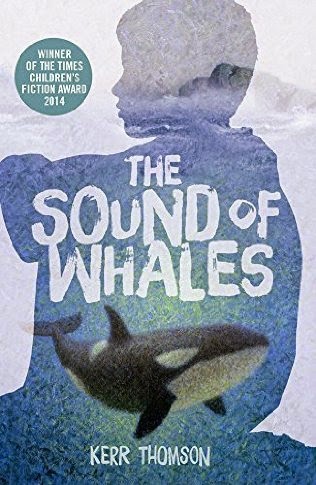
Kerr Thomson - The Sound of Whales - Book Review (Mr Ripley's Enchanted Books)


Book Synopsis: Three children are spending their summer on a wild Scottish island. Fraser is desperate for adventure; Hayley is fed up she's even there; while Dunny spends his days staring out to sea. He hasn't said a word in years. But everything changes with the discovery of two bodies on the beach: a whale and a man. Fraser and Hayley see a mystery-adventure to be solved, but Dunny is inconsolable. And in the end, it will take someone who listens to the sea to put it right.

Book Review: This book was the winner of The Times/Chicken House Children's Fiction Competition 2014. I may not have read all the entries, most of them might not even have the chance to be published, but I'm really glad that this was given the opportunity. It is a deserved winner in my eyes as it is beautifully written. 

Immediately, I felt a strong connection with this book as it brought back many great memories of my personal time exploring remote Scottish Islands. Nothing beats this experience, in my opinion. I was immersed in landscape and natural beauty portrayed particularly well by Kerr. The setting is a very important element of this book. 

Following the narrative, I was gently placed into the lives and place of the characters. The story could be set at any point in time, even though some of the issues explored in the book might be more relevant today. Many important themes are encountered in this book, which will actually make you think about the world. The focus on the love of whales, exploration, the importance of the environment and our relationship with animals. 

As you ramble along the Scottish coast in this book, a mystery thriller unfolds for the three children. A body of a deadman washes up on the shore and changes their lives dramatically . . . . . forever!

There are so many great things that I enjoyed about this book. The slight romantic and carefree feel; an innocent outlook that gently caresses the mind - just like the sea lapping at my feet on a warm sunny day. The three main characters worked really well, even though they are all so different. I was drawn particularly to the character of Dunny who hasn't spoken in years and suffers from mild autism. Each page that you read the more unpredictable his actions and reactions become, this gives a slight psychological edge to the story that I really loved.

How would I summarise this book in order to encourage yo to read it? Well, it's a mystery thriller on a Scottish Island. An atmospheric and magical tale of friendship but with serious issues explored in a cruel world of humanity. Inspired by nature, this book encompasses many great twists and turns. This is a very original debut read and one not to be missed. This is a book that should be read and will be loved by many - my recommendation for April 2015. 

Monday, 30 March 2015

Mr Ripley's Enchanted Books: Q&A Interview with Nick Tankard - Illustrator


How did you become an illustrator?
I can’t remember a time when I didn’t want to be an illustrator. I drew all the time when I was a kid, everything else was boring, I just wanted to draw. I couldn’t wait to leave school and enrol onto a course in Art & Design at Bradford College and then an Illustration course at Middlesbrough College.
I was fortunate to have some great tutors including the illustrator Chris Mould who was a great source of support and encouragement and has remained so in the years since I completed my further education. It was Chris who gave me a nudge in the right direction (or kick up the backside!) just when I needed it most. I was beginning to think I might not make it as an illustrator but Chris encouraged me to continue sending work to publishers and hey presto, it paid off when Helen Boyle (then at Templar Publishing) commissioned me to illustrate the ‘Henry Hunter’ books. I couldn’t have been happier and I’m eternally grateful to them both.


Do you think an illustrator needs a style?
I think it helps Editors and Art Directors to commission illustrators who work in a particular style, however I think it’s good to be adaptable and willing to attempt new methods and to push yourself. Some of my favourite illustrators have the ability to produce work that is very recognizably their own but they also adapt and develop it to move in new directions. A good example would be someone like Shaun Tan who has a very distinguishable style, but with every new book he seems to push and challenge himself to produce new and unique illustrations.


Do you have tips on developing an illustration style?
For me it’s a process that comes about through experimentation and channelling influences. It took me a good while to find a method of working that was comfortable and felt like my own. I’m influenced by something new everyday and forever pondering how it was
produced. By experimenting it’s possible to integrate certain aspects of those influences into your work and little by little you develop your own style, it should be a natural, on-going process.


What is your favourite medium to draw/paint with?
Initially I’ll sketch roughs and final compositions in pencil and then crack on with the good part…inking-in. I use a Micron 01 black fine line pen and work in a crosshatch style. The technique is a painstaking process and one which does my eyes no good at all! With the fine line pen I make a tiny mark in one direction and then turn the image around and add another layer in another direction to create shade and depth or leave bits out to hint at light and space. The image might turn ten to twenty times until it’s finished. It’s a very enjoyable process but a bit mindboggling at times.


Could you tell us a bit about any of your upcoming projects?
I’m really excited about my plans for this summer. I have the third book in Charlie Fletcher’s ‘Dragon Shield’ trilogy to illustrate for Hodder, it’s been a fantastic series to work on, a real privilege. I’ve thoroughly enjoyed exploring London and it’s statues through Charlie’s eyes, I’ll see London in a different way from now on.

I’ve been working in my black & white crosshatching style quite a lot these past couple of years so I’m really looking forward to doing some experimenting with colour techniques. I really like the little pots of ‘Magic Colour Acrylic Ink’ as you can fill the empty cartridges of Rotring pens with them and this enables me to do- wait for it…colour crosshatching! It’s something I’ve been hoping to play about with so I can’t wait to get cracking.

I’ve also got a couple of ideas for Picture books rolling around in my head. Writing and illustrating my own books is something I haven’t attempted yet but the ideas are up
there somewhere and they’re refusing to go away so I’m going to finally put pen to paper to see what comes out. I’d love to illustrate a picture book, it’s a long held ambition so I’ve got my fingers crossed.


Who are your favourite illustrators and why?
There are three illustrators/authors whose books inspired my own ambitions to become an illustrator; they are Raymond Briggs, Tove Jansson and Maurice Sendak. Their work made a huge impression on me when I was a kid to the point where even now looking at the books they made brings back thoughts and feelings I had about them as a child. They were a little bit unsettling, frightening even. Stripy monsters, mysterious islands, lighthouses and bogeymen populate my childhood memories, it explains a lot! Aside from being scared witless I could also see the beauty in these books and I return to them again & again.

A contemporary illustration hero of mine is Shaun Tan. His illustrations have the same ability to unsettle, fascinate and inspire me much the same as Raymond, Tove and Maurice did in my childhood. I think his work will stand the test of time; ‘The Red Tree’ ‘The Arrival’ and ‘The Lost Thing’ already feel like Classics.
There are lots of other artists, authors and illustrators whose work I love and take inspiration from; Levi Pinfold, Jim Kay, David Roberts, Neil Gaiman, Jon Klassen, Aardman Animation, Carson Ellis, Gustave Dore, Faye Hanson, Philip Pullman, Chris Riddell, Alan Lee, Heath Robinson, my old tutor Chris Mould and tons more.


What helps you to be more creative?
I love listening to audiobooks when I’m in the middle of a project. I’ll work in silence when I’m sketching the initial roughs and ideas (for me that’s the worst part, agonizing!) but when it comes to inking-in the final illustrations give me a long night, tea and an audiobook and I’m a happy man. I know I need to get out more!


Where should a person start if they want to pursue a career in illustration?
Ooh that’s quite a difficult one and I guess I can only speak from experience. As I said, it took me quite a few years to achieve my ambition of becoming a published illustrator with a few wrong turns along the way. Persistence and self-motivation are good strengths to have. Editors and agents are the folks you need to approach but they’re very busy people so you need to try and stand out. Sending emails with loads of jpegs probably wont get you very far. There are so many hugely talented illustrators out there all trying to get published so we have to use our imaginations to make an impression. If it seems you aren’t getting anywhere don’t give up (like I almost did) just keep trying.


What do you read for pleasure?
Unfortunately I don’t get much time to read nowadays, that’s where audiobooks come in useful. I quite like ghost stories on audiobook, ‘Dark Matter’ by Michelle Paver is a favourite as is ‘Oh Whistle and I’ll Come to You My Lad’ by M.R. James. Both are great on a dark and stormy night. Other favourites include ‘Watership Down’ and ‘The Box of Delights’.
I haven’t read the ‘Harry Potter’ series yet but I’m clearing a space in my diary for the forthcoming new editions which are being illustrated by Jim Kay, it looks like he’s done an amazing job from what I’ve seen so far.

All images on this post subject to copyright.....

Web Site: http://nicktankard.co.uk/
Twitter:  

Sunday, 29 March 2015

Mr Ripley's Enchanted Books: New Middle Grade Children's Book Picks - April 2015 UK Post Two.


Piers Torday - The Wild Beyond (Last Wild Trilogy 3) - Published by Quercus Children's Books (2 April 2015)
The final heart-stopping instalment of the bestselling, award-winning The Last Wild trilogy.
This is the story of a boy named Kester. He has brought the animals of his world back from the brink of disaster, and he believes there is hope on the other side. And, he might just be right, because:

1. The last blue whale on the planet is calling to him.

2. His animal allies are ready for one last fight.

3. Out there, somewhere, a brave mouse holds the key to the future…


Victoria Scott - Salt & Stone - (Fire & Flood) - Published by Chicken House Ltd (2 April 2015)
One hundred and twenty-two began. Only forty-one remain. Tella's made it through the first terrains of the Brimstone Bleed - but the contest isn't over yet. If she wants to save her brother, she must face oceans and icy mountains, all for the chance of winning the Cure. And even if Tella survives these deadly places, the greatest threat will still be her fellow Contenders - even the ones she trusts the most.


Melissa Grey - The Girl at Midnight - Published by Atom (28 April 2015)
Beneath the streets of New York City live the Avicen, an ancient race of people with feathers for hair and magic running through their veins. Age-old enchantments keep them hidden from humans. All but one. Echo is a runaway pickpocket who survives by selling stolen treasures on the black market, and the Avicen are the only family she's ever known.
Echo is clever and daring, and at times she can be brash, but above all else she's fiercely loyal. So when a centuries-old war crests on the borders of her home, she decides it's time to act.
Legend has it that there is a way to end the conflict once and for all: find the Firebird, a mythical entity believed to possess power the likes of which the world has never seen. It will be no easy task, but if life as a thief has taught Echo anything, it's how to hunt down what she wants . . . and how to take it.
But some jobs aren't as straightforward as they seem. And this one might just set the world on fire.


Alan Snow - Worse Things Happen at Sea - Published by OUP Oxford (2 April 2015)
The people of Ratbridge are going crazy for the amazing miracle medicine, Black Jollop. But disaster strikes when it looks as though the powerful pick-me-up is running out! It's up to Arthur and his friends on board the Nautical Laundry to journey afar to gather the secret ingredient.  It's excitement ahoy in this madcap story, full of hilarious and outrageous characters, including the loveable Boxtrolls who are now the stars of a major film The Boxtrolls.

Thursday, 26 March 2015

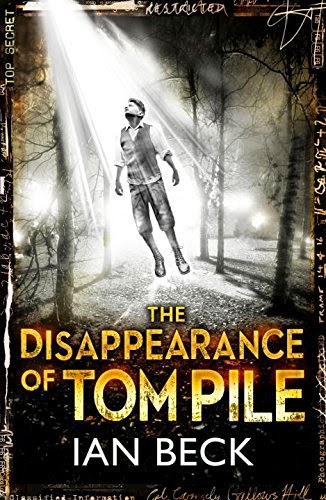
Mr Ripley's Enchanted Books: Guest Post by Ian Beck - The Disappearance of Tom Pile


The Disappearance of Tom Pile
Volume one of The Casebooks of Captain Holloway - Happy Publication Today! 

I had the first shadow of the idea for The Disappearance of Tom Pile in 1978. In fact, I remember clearly it was New Year’s Day. I was staying at my parents in law’s house in the same remote part of West Dorset featured in the book. We had stood out the night before in the cold churchyard with my Father in law, my brother in law and an Oxford Don from All Souls. It was very near midnight. The sky was clear and the stars looked particularly bright unaffected as they were by any light pollution. The church stands halfway up the steep hill that surmounts the village of Litton Cheney in the Bride valley. My wife’s family had lived in the village since the early 1950s... Their house was The Old Rectory. It sat close by the church and the graves just as its fictional counterpart does in my story.


We stood marvelling that night at the clarity of the stars and the intensity of the winter night sky. There were philosophical mutterings about the terrifying infinity of space and so on. A great bank of cloud rolled in just on midnight. The church bells rang in the new year. When we went back into the house the first flakes of snow were already falling. By morning the snow was banked up to the top of the hedgerows. We were effectively snowed in. We spent a happy day looking through the family photograph albums. My Mother in Law, Janet Stone, was a keen photographer. Among the many portraits and images in her albums were photographs of their old gardener from the 1950s. His name was Tom Pile. He was a Noah like figure, with a big white beard. He wore collarless shirts, wide braces and farmer’s corduroys. They said the only time he left the village was to go and fight in the First World War. Later that afternoon moved by the beauty of the night sky from the night before I wrote
down a few hasty notes about a boy in the same village in the early 20th c who witnesses strange lights in the sky and sets out to investigate. This was long before I had made any books for children at all (my first wasn’t until 1982). I was at that time a freelance commercial illustrator.


Even as an art student I had the itch to write. When I moved to London A few years later I attended creative writing classes at the City Lit. The tutor was very much an avant-garde novelist. There was little encouragement of what you might call traditional narrative. This effectively put me off and I think stopped me writing anything for a while. It was only after making several picture books that I was encouraged to write my own stories to illustrate by my then-editor David Fickling. I cut my teeth so to speak writing and illustrating many picture books. Then I began to think that perhaps I could attempt the longer form. I started and abandoned things for a while. I had no real sense of urgency, I was busy and had a young family to support. I toyed with ideas, including attempting a few more pages of the lights in the sky in the 1900s Dorset story. All were put firmly away in a plan's chest drawer.

Then in 2003 a very close friend died. It concentrated my mind. I was older than him. My time really could be limited. If I was going to do it I had better get going. So one of my many ideas Tom Trueheart was the first item out of the drawer, and he grew unexpectedly into three books. Other stories followed, some for older readers such as Pastworld, and some for younger like The Haunting of Charity Delafield and The Hidden Kingdom. Finally, I saw a way to revive and write the Dorset based ‘lights in the sky’ story. I took the name of the real Tom Pile from the photo album and gave him a whole new alternate life and strange adventure.


I set the whole thing in the context of a fictional investigative bureau of the unexplained in World War 2. This gave me a chance to introduce extra characters, Jack Carmody the
cockney savant and the kindly Captain Holloway keeper of the secrets. I always liked these kinds of stories when I was a young reader. However, I would always feel short-changed if there was a tedious rational explanation to the weird or supernatural events; ie it was crooked pretending to be ghosts and so on. I wanted real ghosts.

I hope I have avoided any such dull rationality in this first book about Tom Pile. I have more or less completed the second book now. It is called The Miraculous Return of Annick Garel, you can read the opening chapter as an addendum at the end of the first book. The action has moved forward a year or so and mostly happens in Brittany in occupied France. I have no idea at the moment if there will be a third book. I would like to think that the characters have at least one more story in them. I suspect we shall have to wait and see if Tom Pile gathers any readers.  

Ian Beck March 2015 - Ian Beck Wordpress Website
Published by Corgi Children's (26 Mar. 2015)

Tuesday, 24 March 2015

Caleb Krisp by Anyone But Ivy Pocket - Book Review (Mr Ripley's Enchanted Books)


Book Synopsis: Ivy Pocket is a twelve-year-old maid of no importance, with a very lofty opinion of herself. Dumped in Paris by the Countess Carbunkle, who would rather run away to South America than continue in Ivy's companionship, our young heroine (of sorts) finds herself with no money and no home to go to ... until she is summoned to the bedside of the dying Duchess of Trinity.
For the princely sum of £500 (enough to buy a carriage, and possibly a monkey), Ivy agrees to courier the Duchess's most precious possession - the Clock Diamond - to England, and to put it around the neck of the revolting Matilda Butterfield on her twelfth birthday. It's not long before Ivy finds herself at the heart of a conspiracy involving mischief, mayhem and murder.

Who can you rely on to deliver a priceless diamond to a revolting aristocrat?
Book Review: You'll never feel the same again once you've read this book. Following the unfortunate events of Ivy Pocket will surely leave you feeling unhinged in a rather odd way. Miss Exaggeration is a feisty twelve-year-old full of grand delusions on a massive scale. I still can't help thinking about her days and days after I've finished reading the book. She is certainly a one of a kind character; her exuberant personality is very infectious. I think that all of these attributes may make her one of my favourite new characters of the moment. 
The story is pure mayhem containing a rip cord of crazy events that will skip by you in a blur of pure imagination and great storytelling. This book is full of mild violence which is timely interspaced with some bizarre action moments.You will find yourself laughing one minute at the absurd things Ivy Pocket says and does. The next thing you will be cringing at her brutal honesty and bitter words. However, this creates brilliant reading and is really engaging.

It's very whimsical - full of irony and wicked intentions. I loved the gothic feel that came through which is very reminiscent to Lemony Snicket. Fans of these books will surely love reading this one as well. 

This is a very quirky read and will surely be a future bestseller. It's already been scooped up by many publishers up and down the country. I loved every page of this book. It is a journey full of self discovery both for the characters and readers alike. 
In my opinion, this is a book that any reluctant reader will sink their teeth into and enjoy. The finished copy includes a superb collection of illustrated images by the talented illustrator John Kelly, which adds to this book to create an overall great reading experience. 

  • UK Hardcover:
     
    320 pages - Publisher: Bloomsbury Childrens (9 April 2015)
  • ISBN-10: 1408858630 Age: 8-12 yrs

Monday, 23 March 2015

Mr Ripley's Enchanted Books: New Middle Grade Children's Book Picks - April 2015 UK Post One.


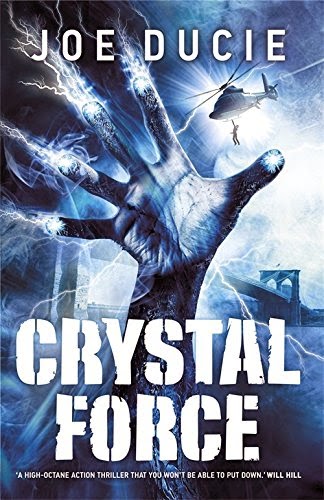
Joe Ducie - Crystal Force - Published by Hot Key Books (2 April 2015)
On the run after escaping from what was supposed to be the world's most secure juvenile facility (and blowing it up in the process), Will Drake knows it's only a matter of time before the sinister Alliance catches up with him. But Drake is in need of an alliance of his own - knowing who to trust is becoming increasingly difficult, and after having been exposed to the highly unstable (and potentially deadly) Crystal-X whilst fleeing from the Rig, it looks like time might be running out for him all together. His arm has started to mutate into an impenetrable black crystal, and although it gives him a superhuman-like ability to fight, it might also be causing him to lose his mind. Surrounded by enemies and desperate for help, Drake and his escapee comrades are forced to form an uneasy partnership with a mysterious group who also claim to have been exposed to Crystal-X. They say they know how to use its powers for good - but can Drake really keep running forever? And who should he trust more - his supposed friends, or the voices in his head...?


Julie Hunt - Song for a Scarlet Runner - Published by Allen & Unwin Children's Books (9 April 2015)
Peat is on the run - forced to flee for her life when she's blamed for bringing bad luck to her village. She heads for the endless marshes, where she's caught by an old healer-woman who makes Peat her apprentice and teaches her the skill of storytelling. But a story can be a dangerous thing. It can take you out of one world and leave you stranded in another - and Peat finds herself trapped in an eerie place beyond the Silver River where time stands still. Her only friends are a 900-year-old boy and his ghost hound, plus a small and slippery sleek a cunning creature that might sink his teeth into your leg one minute, and save your life the next.


Django Wexler - The Mad Apprentice (Forbidden Library 2)  - Published by Corgi Childrens (7 May 2015)
Old Readers are supposed to live for ever, magically inhabiting the spaces between stories. They’re not supposed to die. But they can be murdered. When an ancient Reader is killed, seemingly by his own apprentice, the hierarchy of the magical world tumbles and its spider web of alliances begin to unravel.
Now it’s up to Alice and the remaining apprentices to sort out the mess and catch the murderer. But the world is changing all around them. Things are not as they seem. It’s almost as if they are trapped in a strange sort of labyrinth . . .

Sam Gayton - Hercufleas - Published by Andersen Press (2 April 2015)
Greta is a girl on a mission: to venture to Avalon and bring back a hero who can save her home from destruction by the monstrous giant Yuk. Many heroes have tried before now. Many have failed. What Greta needs is a hero whose courage and self-belief are greater than himself. She needs HercufleasThe only problem: he is a flea, no bigger than a raisin. But the smallest person might just have the biggest effect . . .

Friday, 20 March 2015

Mr Ripley's Enchanted Books: M . G. Harris - Gerry Anderson's Gemini Force 1: Black Horizon - Book Review


GERRY ANDERSON’S GEMINI FORCE ONE is soon to be published by Orion Children’s Books in April 2015. After a fantastic Kickstarter campaign, 600 loyal Anderson fans made this project a reality. The material remained untouched, but not forgotten, after the sad death of Gerry Anderson in 2012 until Jamie and his family approached M.G. Harris. She was tasked to continue the fictional world of rescue writing. As a result, the vision of Gerry Anderson's creations have been brought back to modern day life.

This has to be the one of the most anticipated books this year. Gemini Force is the first book in a trilogy to celebrate the 50th Anniversary of the first broadcast of THUNDERBIRDS. There are two more books to come: 'Ghost Mine' in September 2015 and the final book in Spring 2016. Hopefully the book will be turned into a screen project, so that Anderson's legendary and iconic pioneering skills are shared with the world once more. 

GF1 is a fantastic mix of new and old. M.G. Harris has done an amazing job developing Anderson's trademark formula of ADVENTURE and RESCUE to inspire a new generation of fans. Whilst also enabling old fans like me to buzz back to my childhood days. It has everything that you would want and expect from a five star book. You'll soon find yourself rocketing to Tracey Island once you start this epic adventure. 

Ben Carrington is a 16 year old boy who is coming to terms with the death of his father. His grief propels him into the biggest adventure that a boy could ever imagine. In my opinion, the main character is written quite vaguely and may need to be further established in the next book. 

Gemini Force is an elite organisation that has been established by a rich entrepreneur. It is secret organisation with the key aim of providing rescue services. Ben is determined to become part of that team, but he needs to prove to his mother first that he has got what it takes. 

The story arc in the first book is true to Anderson's magical ethics in every way. There is ACTION and drama in abundance. The cool technology is written particularly well and contains lots of detailed information. In other books this can sometimes be missed out or only briefly mentioned, but M. G. Harris utilises the opportunity to enhance the story effectively. 

The other quirky characters find themselves in a race against the clock - human limits are pushed through many exhilarating missions. The author holds no punches in the plot; things don't always go well and happy endings are not necessarily guaranteed. However, this is what makes this book so good - don't expect the expected! 

This series will definitely appeal to readers who love fast-paced action. Readers of the Young James Bond series and Alex Rider series should definitely search out this book. Older readers will find themselves reminiscing about the brilliant creations from Stingray, Captain Scarlet, UFO and the Terrahawks. I remember watching and enjoying all of these many years ago; each still have a little part to play in the book, but with a modern day update. This book will keep you on all of your toes as it full of many nail biting moments.  

LET THE ACTION GO....

Featured post

Mr Ripley's Enchanted Books - Favourite Children's Book Picks - FEB 2026 UK

  Philip Reeve -  Bridge of Storms (A New Mortal Engines Novel) - Published by  Scholastic Press ( 3 Feb. 2026) -  ISBN-13 ‏ : ‎  978-154613...