Showing posts with label March 2015. Show all posts

Thursday, 21 April 2016

Mr Ripley's Enchanted Books: Raymond Arroyo - Will Wilder: The Relic of Perilous Falls - Book Review


Will Wilder is a mischievous, headstrong twelve-year-old with an otherworldly gift—he alone can see the nefarious creatures encroaching on Perilous Falls. For nearly a century, a sacred relic has protected his hometown from the raging waters surrounding it. But when Will “borrows” the relic for his own purposes, he accidentally unleashes an ancient evil.
 
As boats sink and hideous creatures crawl from the rising waters, Will must set things right before it is too late. With the help of his sweet (if lethal) Great Aunt Lucille, the curator of a museum of powerful artifacts, Will proves that the actions of one twelve-year-old boy can change the world. 

Will Wilder: The Relic of Perilous falls is the first book in a new series by Raymond Arroyo, who is the producer, lead anchor and managing editor of EWTN News. This intrepid hero was born into this world through nightly instalments magically created for his children at bath times.  These slapstick adventures have now been put to the test and tried on you, the dear reader.

This book has been compared to Percy Jackson and I can see why. It's pretty fast paced and easy going. Will Wilder is the main character, he is a very likeable twelve year old with a vivid personality.  At first glance he might not act or be your typical hero, but a secret family prophecy might turn him into one. Therefore, I would recommend you turn the pages to find out what happens. 

From the first few chapters of the book you will hurtle into a great captivating high-octane action fantasy adventure. This is a gripping read that is slightly reminiscent of a younger version of Indiana Jones. The plot delivers a strange mix of subjects and themes such as myths, religion and historical antiques found in museums and churches around the world. The book is a little quirky and all the elements just about work to keep the readers on their toes. 

The characters are written well. They all have distinctive personalities and traits that make them both interesting and somewhat mysterious. My personal favourite is Aunt Lucille, who is a little eccentric and a deadly sixty year old that you would not want to get on the wrong side of her. Another great aspect included the monsters who fill you with fear and dread. They are not stereotypical which was very refreshing. I really enjoyed reading this inventive story full of humour and suspense. This is a great book for the young at heart, as it is entertaining, full of action and very fun to read. It is a great battle between good and evil that will see another instalment, and one I will be looking forward to read. 

Check out the great black and white illustrations by Antonio Javier Caparo. This book has been published in the US by Crown Books for Young Readers in March 2016.

Thursday, 23 April 2015

Mr Ripley's Enchanted Books: Cathy MacPhail - Devil You Know - Book Review (Kelpiesteen)


Book Synopsis: "Baz was the kind of friend I wanted. Everyone seemed a bit afraid of him." Forced to move away from his dad in Aberdeen to a run-down Glasgow council estate, Logan thinks he's pretty lucky to have made any friends -- let alone Baz and the boys. Baz might have a bit of reputation, be a bit mouthy, but he's the kind of friend who'll stick up for you; who'll make life interesting -- or should that be dangerous? When Logan, Baz and the boys get caught up a local turf war Baz is the first to fight back. But the aftermath leads Logan and his friends deeper into a world of real-life gangs, threats and lethal revenge. How far will Baz go, and will Logan follow him?

Book Review: This is another interesting and challenging take on teenage life from the award winning author Cathy MacPhail. This is the second book that I have read written by Cathy. I really connected with this story. It brought back a flood of childhood memories; the feeling of freedom and the naive outlook on the world.   

I had a great time relating to the characters in this story as it really took me back to my own childhood. I was immediately immersed into the world of Logan and his friends. I felt every heartbeat of this story pulsating with the reality of human life. Set on a challenging Glasgow council estate, perhaps not the most exciting place you might be thinking, but it is certainly one that will get you thinking. The themes will have similarities to those that young people will be facing today as they try to navigate their teenage lives through these. 

The book creates a large imprint in the friendship department. It focuses on the daily outlook on life and families and the fact that they are never perfect. It depicts many social problems and fears that we may have about ourselves and the world around us. 

This book is an adventure full of thrills and spills where the characters get involved in the proper gang culture, and not just kid ones. This brings about some dark and deadly serious plot turns as threats and revenge have their price. How dangerous will it get for Logan, Baz, Mickey, Gary and Claude ( don't forget Ricky the dog) "just a bunch of boys" looking for something to do at night? 

I think teenage boys will love this book. The plot is very clever and well thought out. Towards the end of the story you will be faced with a killer twist. I did not see this coming, so I will not say anything else, but the clues are there. This story is fast paced and well plotted; full of action and equal amounts of tension that will have you gripped throughout. 

This is another book that I would not normally pick up but I really loved it. Mnay thanks to Floris Books for sending me a copy.  

Paperback: 240 Pages  - Publisher: Kelpies 6 Mar. 2015 - ISBN-13: 978-1782501794

Tuesday, 7 April 2015

Mr Ripley's Interview with Ross MacKenzie - The Nowhere Emporium (Kelpies)


This has to be one of my favourite middle grade reads so far this year; pure fantastical fantasy. I'm really pleased to have been able to ask a few wee questions about the book and Ross's writing career. Thank you for your brilliant responses. 

Tell us a little bit about The Nowhere Emporium?
The book follows Daniel Holmes, an orphan who stumbles across an enchanted shop called The Nowhere Emporium. Daniel sort of falls into a job as apprentice to the mysterious owner of the Emporium, Lucien Silver. The shop contains a huge labyrinth of passageways, and behind the many doors lie Mr Silver's "Wonders" - rooms where nothing is impossible and the only limit is the imagination. Daniel loves his new life in the shop, but when a shadow from Mr Silver's past shows up and threatens everything, it falls to Daniel to save the day.

Give us an insight into your main character. What does he/she do that is so special?
Daniel is an orphan. He has vague memories of his parents, and when we meet him at the beginning of the book his life is pretty miserable. He's lonely. He's having a bit of bother with bullies. But that changes when he finds the Nowhere Emporium. It becomes quite obvious that Daniel has a gift for magic. But I think it's Daniel's bravery and cleverness that really sets him apart, even over and above the magic stuff.

Will you be writing a sequel? If so what can you tell us about it?
I wouldn't rule it out but I really don't know!  The kernel of an idea for an Emporium sequel is definitely there, but there are so many other ideas pushing and shoving in my head, and I'm always attracted to shiny new things. And of course it also depends on whether readers actually want a sequel.

Do you write an outline before every book you write?
The short answer is no. The slightly longer answer is that I do make notes of where I think the story will go. It's a bit like setting of on a journey with a few places marked on a map, but lots of space between those destinations for exploring. Sometimes there's treasure waiting on those unexpected detours.

While you were writing, did you ever feel as if you were one of the characters?
I do get lost in a story when I write, and for me that's one of the joys of being a writer. The characters come alive and do unexpected things, and I suppose there must be a bit of me in all of them.

Do you proofread/edit all your own books or do you get someone to do that for you?
My lovely agent Stephanie is the first person to read any of my new stuff, and she's really good at telling me right away if something is working or not. We worked hard to get The Nowhere Emporium in shape, and it's a better book because of that process. 
And of course, once the book finds a publisher, all the fun starts again when you get to work with an editor, refining the story even more.

How do you think you have evolved creatively?
I'm definitely more confident now, and I'm becoming comfortable in trusting my gut on what works and what doesn't. Also, I think The Nowhere Emporium is a big leap forward for me in terms of finding my voice and the sort of stories I want to tell. I'm just getting started.


Have you ever hated something you wrote? 
Loads of times! If I wrote longhand I'd have wasted an unthinkable amount of paper on rotten ideas by now. Thankfully I write on computer so the trees are spared.

What books/authors have influenced your writing? 
Neil Gaiman for sure. Everything he writes sticks with me afterwards for the longest time. The Ocean at the End of the Lane is one of my all-time favourite books. I'd also say JK Rowling, Terry Pratchett and Stephen King have been major influences.

What book are you reading now? 
Great Expectations by Charles Dickens.

Is there anything else that you would like to tell us?
My new blog/site will be up and running soon. I'll be posting about my journey as an author, writing the occasional short story, and answering any questions readers might have. You can find it at rossmauthor.com

Friday, 3 April 2015

Mr Ripley's Enchanted Books/ Ben Illis: Stefan Mohamed Q&A (Bitter Sixteen)


Thank you Ben for your input into the development of some of the questions. Thank you also to Stefan for writing the most detailed responses to the questions. Readers will certainly get a feel for the journey that you have undertaken in writing this story. I'm very much looking forward to reading a copy myself. 
Finally, I'd like to take the opportunity to wish Stefan  a HAPPY BIRTHDAY. I hope that you have a great day. 

Tell us a little bit about Bitter Sixteen.
Bitter Sixteen is the story of Stanly, a cynical and somewhat socially dysfunctional teenager living in the rural Welsh town of Tref-y-Celwyn. Apart from having a talking beagle called Daryl for a best friend, his life is pretty unremarkable – until he turns sixteen and begins developing superpowers, specifically flight and telekinesis. Unfortunately there isn’t much scope for using superpowers in tiny Welsh border towns – but there’s a much bigger, weirder and more dangerous world waiting for Stanly in London…

Give us an insight into your main character(s). What does he/she/they do that is so special?
Stanly’s a slightly troubled individual who’s never really had friends, and considers himself as being very apart from his classmates – he has no time for the politics of school and detests bullies, who tend to target him because he’s odd and different. He definitely wouldn’t consider himself a victim, though. He’d probably like to think of himself as being very enigmatic, sardonic and detached, and he is in some ways, but he’s also very passionate and has a lot of anger in him. Something I wanted to play with in the book and its sequels is the idea that an angry, cynical, socially dysfunctional teenager might not necessarily be the best candidate for superpowers – I certainly would have made a terrible superhero at that age! Lots of typical hero’s journey / chosen one-style narratives tend to feature young men who should be very emotionally immature but immediately rise to the challenge and become the best that they can be. Stanly has a bit of trouble with that, although his heart’s in the right place.


In terms of his powers, I wanted to depict their growth and his experience of them as realistically as possible. What would it actually be like, for someone living a fairly mundane day-to-day existence, to suddenly have these extraordinary abilities? How does it change his perception of himself and the world? Are flight and telekinesis actually useful in practical terms? I absolutely do not want to use the words “gritty” or “grounded”, though, because they’ve been over-used to the point of meaninglessness. Plus there’s also crazy, fun superhero action, because I like to both have and eat my cake.


Why do you think we as readers and movie-goers are so drawn to characters with extraordinary powers? Do you feel the world of the “empowered” in fiction and film is a fair reflection on the world we actually inhabit?
I think it’s very common for people to feel powerless, to feel as though they have very little control and choice over their own lives and over the massive, terrible things that happen in the world, so it’s fairly natural that we would find stories featuring superpowered individuals very appealing, seeing characters with a level of control that we could never imagine having in reality. And when you’re going through adolescence, that kind of powerlessness is compounded by a lot of extra, very potent confusion, which is why I think such narratives are especially resonant for younger readers who are just starting to work out who they are, and define themselves in relation to the rest of the world. There’s also an undeniable thrill in seeing ultra-competent people taking care of business and kicking the arse of evildoers.

In terms of reflecting the world, I think it really depends on the story – in Buffy the Vampire
Slayer, for example, superhuman powers and monsters etc are very much metaphors for the problems of growing up, symbols of empowerment and womanhood etc. Whereas in the DC comics universe, many of the superpowered types are much more like Greek gods; huge, iconic figures who ultimately aren’t very relatable. And the portrayal of such powers is different again in Marvel comics. So I think it depends – and I think the wonderful thing about fantastical universes, even relatively realistic ones like mine, is that you can tell pretty much any kind of story you want to tell, and reflect the real world as much or as little as you want.

You graduated with a first class honours degree in creative writing. How did this influence the shaping of the novel, and your writing in general?
I definitely benefited massively from the course I went on, and I would imagine that anybody who read any of my stuff before and after would have noticed a huge difference! Such courses are definitely not for everybody, but I found spending three years around other writers, both professional and fellow amateurs, honing my craft and just having the time and space to concentrate on writing helped me immeasurably.


There’s a nasty strain of snobbery among certain individuals about creative writing courses – even from writers who are perfectly happy to pick up a fee for lecturing but then go on to bad mouth their students and courses in the press, which I think is both rank hypocrisy and the height of bad manners. Can a creative writing course make you a good writer? Not necessarily, and I think there needs to be some sort of spark there in the first place. But learning about the technical aspects of writing, being exposed to writers you might not otherwise have encountered, learning to take – and give out – constructive criticism and process it properly, rather than throwing your toys out of the pram because oh my God people just don’t get what you’re trying to do – how could that not be beneficial?


Since winning the Dylan Thomas prize for unpublished young writers back in 2010, how much has the book changed?
A lot! For one thing, the original draft had Stanly travelling to a fictional city called Breezeblock (I have no idea why I chose that name – that’s one creative decision that’s been lost in the mists of time), rather than to London. This was because I needed him to go to a city, but when I was 16, although I’d been to London many times, I didn’t know the city nearly well enough to convincingly set a story there. Breezeblock was sort of a Gotham-esque hyper city, the archetypal urban superhero environment, although it certainly had a flavour of London ‘cos that was my only experience of cities. Then in subsequent conversations with my agent, editors etc we decided to change the setting to London, which I think improved the book in terms of accessibility, and made it more realistic. Also at this point I’d spent three years at uni in Kingston, so knew my way around the city better.


More generally, having had so much time to do re-writes with feedback from various people – particularly the extensive and invaluable back and forth with my agent Ben – I’ve been able to tighten the book up a lot, make the dialogue punchier, craft better prose, iron out flaws. I’ve also written several other books in the meantime, some very different from Bitter Sixteen, so that experience has helped. When I won the prize I naively thought that everything was going to immediately fall into place and the book would be published within a year, and while it didn’t end up unfolding like that I’m actually really glad, with the benefit of hindsight. Not only have we managed to find a brilliant publisher in Salt, who really support and understand what I’m trying to do, but I feel that I’ve matured a lot as a writer, as an editor, and as a person. So both the book and I are much better prepared to be going out into the world that we would have been back in 2010!


Not that I’m actually prepared. I’m absolutely terrified. But there you go.

Having written the first draft of this book when you were a sixteen-year-old yourself, how has it been returning to the same character almost a decade later? Has sixteen-year-old Stanly changed much over the years?
Stanly’s been with me on and off the whole time, as I’ve done lots of rewrites of Bitter Sixteen as well as writing two sequels, so I find slipping back into the character’s voice relatively easy. There is a temptation to make the style more fluent, to improve the writing, and finding a balance between making the book better and maintaining the rawness of the teenage voice has been challenging at times. He’s always been quite precocious though, luckily. As a character he’s pretty much the same as he’s always been – the main things I’ve needed to tweak and update have been his pop culture references, and things like that. It’s amazing how something first written in 2005, which is a relatively short time ago, can date so quickly! For example, I barely used the Internet at all when I first wrote the book, and now it’s ubiquitous, so I had to bring that aspect of the book up to date.


How much of you do you feel there is in Stanly? Is that more the sixteen-year-old you, or the twenty-six-year-old?
We’re definitely similar in lots of ways, albeit with one crucial difference – he likes baked beans. Although I don’t know if that’s revealed until book two. Spoilers.

To an extent Stanly is who I wished I was back when I first created him. I was bullied a lot when I was at school, but Stanly brushes it off and turns it around on his tormentors, and uses it as fuel to battle injustice, whereas I was much less confident, much less sure of myself, and I internalised all that stuff a lot more. So I guess there’s some slight wish fulfillment going on there (not to mention the superpowers and the talking dog). Although he’s a terrible student and I was always a very attentive student, terrified of getting into trouble!


In subsequent drafts I’ve tried to address the whole wish fulfillment thing a bit, because there’s something slightly cringeworthy about writing yourself a super duper awesome avatar – particularly as Stanly’s town and school are basically fictionalised versions of the town I grew up in and the school I went to! It’s a very tricky balance. I think writing that kind of wish fulfillment is fine when you’re writing at age sixteen, but it’s harder to justify a decade later. So Stanly’s a bit more awkward than he once was, more angry and impulsive. He has a bit of a superiority complex at school, and he doesn’t have all the answers. He’s also far from blameless in some of the bad stuff that ends up happening to him. I don’t think that protagonists necessarily have to be likeable all the time (although being likeable some of the time helps, of course), flawed characters are much more interesting.


We’re both 100-per-cent geek, though – sci-fi, fantasy etc are the lenses through which he sees the world, same as me. I just never got the job in the comics shop, sadly.


How do your interests in music and pop culture affect and influence your writing?
They play a fairly major role, although it’s something I’m increasingly aware of, and something that I try to dial back depending on what I’m writing. I could very easily have every character I write be a fast-talking pop culture junkie who knows Buffy backwards, discusses obscure musical genres and constantly quotes Star Wars, but in the wrong context you risk both alienating large swathes of your audience and creating a world and characters that simply aren’t realistic.


I think it makes sense in a contemporary-set superhero story to have characters be aware of the history and tropes of superheroes in the media – in fact that’s something I’ve had fun playing with in Bitter Sixteen and its sequels. If you suddenly had superpowers, your mind would immediately leap to superheroes, and becoming a superhero, because they’re such a huge cultural force and their narratives are so iconic. How does that translate to the real world? Does it? Is it remotely practical? I found that interesting to explore.


I’ve also written a separate, standalone novel that’s set in the world of music and is very influenced by my love of music, so in that context it makes sense for the characters to reference different musicians and styles, and to assume a certain level of knowledge – or a certain level of acceptance, at least – on the part of your readership.
But I do have to rein it in sometimes!

How much research do you do?
It depends. For Bitter Sixteen I haven’t had to do an awful lot, apart from making sure that my London geography makes enough sense that a Londoner reading it won’t get completely pulled out of the story! But even then, it’s a hyper real version of London that works for the purposes of this story, so as long as I captured a certain essence I didn’t necessarily feel that it had to be a cinéma vérité documentary version of the city. There are all sorts of issues surrounding London that I’ve become aware of – the super-rich driving other people out of the city, crazy price rises, huge cultural shifts etc – and considered addressing, but I eventually decided that they’d take up too much extra space and would affect the narrative in ways that ultimately weren’t beneficial. There may be room in the sequels, though.


I think research is definitely important – you need to have your facts straight, you need to know what you’re talking about, otherwise your reader won’t be able to suspend their disbelief, and all the punchy dialogue and exciting action in the world won’t stop your story from collapsing. But depending on the story you’re telling, it’s not necessarily the be-all and end-all. If you can effectively dramatise a trip through London’s sewers, for example, and keep the reader’s attention, then I don’t think you need to have done any research into Joseph Bazalgette (thanks Wikipedia!).

What are you working on at the minute?
At the moment I’m re-drafting the third book in the trilogy, currently titled Stanly’s Ghost, although once this draft is done I think I’m going to need to go away and work on something that’s not Stanly-related for a bit! Much as I love the world, sometimes staying in one fictional universe for a long time can feel a bit claustrophobic, creatively. Wow, that looks pretty pretentious written down. I have a couple of standalone novels that I’d like to punch into shape, and the first book in a separate trilogy that needs re-drafting. Or maybe I’ll do something completely new. I’m also writing and performing a lot of poetry, which is great fun and a very different creative outlet from prose. I can always fall back on poetry when prose gets frustrating, and vice versa!


If you could have superpowers, what would they be and why?
Flight. Without a doubt. It’s the only power I’ve ever wanted. Even now sometimes when I’m out walking I look up at the sky and feel genuinely upset that I can’t just take off. Which is totally to do with ultimate freedom and magic and recapturing childhood wonder and the poetry of human flight, rather than laziness.

Is there anything else that you would like to tell us?
Any fans of superhero comics who are not currently reading G. Willow Wilson’s Ms. Marvel must check it out at once, because Kamala Khan is an absolutely brilliant heroine and also a very important character to be headlining a high-profile comic in the current political climate.
Also, please vote on the 7th of May!

Thursday, 26 March 2015

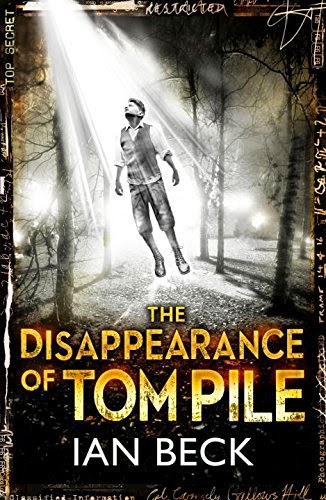
Mr Ripley's Enchanted Books: Guest Post by Ian Beck - The Disappearance of Tom Pile


The Disappearance of Tom Pile
Volume one of The Casebooks of Captain Holloway - Happy Publication Today! 

I had the first shadow of the idea for The Disappearance of Tom Pile in 1978. In fact, I remember clearly it was New Year’s Day. I was staying at my parents in law’s house in the same remote part of West Dorset featured in the book. We had stood out the night before in the cold churchyard with my Father in law, my brother in law and an Oxford Don from All Souls. It was very near midnight. The sky was clear and the stars looked particularly bright unaffected as they were by any light pollution. The church stands halfway up the steep hill that surmounts the village of Litton Cheney in the Bride valley. My wife’s family had lived in the village since the early 1950s... Their house was The Old Rectory. It sat close by the church and the graves just as its fictional counterpart does in my story.


We stood marvelling that night at the clarity of the stars and the intensity of the winter night sky. There were philosophical mutterings about the terrifying infinity of space and so on. A great bank of cloud rolled in just on midnight. The church bells rang in the new year. When we went back into the house the first flakes of snow were already falling. By morning the snow was banked up to the top of the hedgerows. We were effectively snowed in. We spent a happy day looking through the family photograph albums. My Mother in Law, Janet Stone, was a keen photographer. Among the many portraits and images in her albums were photographs of their old gardener from the 1950s. His name was Tom Pile. He was a Noah like figure, with a big white beard. He wore collarless shirts, wide braces and farmer’s corduroys. They said the only time he left the village was to go and fight in the First World War. Later that afternoon moved by the beauty of the night sky from the night before I wrote
down a few hasty notes about a boy in the same village in the early 20th c who witnesses strange lights in the sky and sets out to investigate. This was long before I had made any books for children at all (my first wasn’t until 1982). I was at that time a freelance commercial illustrator.


Even as an art student I had the itch to write. When I moved to London A few years later I attended creative writing classes at the City Lit. The tutor was very much an avant-garde novelist. There was little encouragement of what you might call traditional narrative. This effectively put me off and I think stopped me writing anything for a while. It was only after making several picture books that I was encouraged to write my own stories to illustrate by my then-editor David Fickling. I cut my teeth so to speak writing and illustrating many picture books. Then I began to think that perhaps I could attempt the longer form. I started and abandoned things for a while. I had no real sense of urgency, I was busy and had a young family to support. I toyed with ideas, including attempting a few more pages of the lights in the sky in the 1900s Dorset story. All were put firmly away in a plan's chest drawer.

Then in 2003 a very close friend died. It concentrated my mind. I was older than him. My time really could be limited. If I was going to do it I had better get going. So one of my many ideas Tom Trueheart was the first item out of the drawer, and he grew unexpectedly into three books. Other stories followed, some for older readers such as Pastworld, and some for younger like The Haunting of Charity Delafield and The Hidden Kingdom. Finally, I saw a way to revive and write the Dorset based ‘lights in the sky’ story. I took the name of the real Tom Pile from the photo album and gave him a whole new alternate life and strange adventure.


I set the whole thing in the context of a fictional investigative bureau of the unexplained in World War 2. This gave me a chance to introduce extra characters, Jack Carmody the
cockney savant and the kindly Captain Holloway keeper of the secrets. I always liked these kinds of stories when I was a young reader. However, I would always feel short-changed if there was a tedious rational explanation to the weird or supernatural events; ie it was crooked pretending to be ghosts and so on. I wanted real ghosts.

I hope I have avoided any such dull rationality in this first book about Tom Pile. I have more or less completed the second book now. It is called The Miraculous Return of Annick Garel, you can read the opening chapter as an addendum at the end of the first book. The action has moved forward a year or so and mostly happens in Brittany in occupied France. I have no idea at the moment if there will be a third book. I would like to think that the characters have at least one more story in them. I suspect we shall have to wait and see if Tom Pile gathers any readers.  

Ian Beck March 2015 - Ian Beck Wordpress Website
Published by Corgi Children's (26 Mar. 2015)

Thursday, 19 March 2015

Mr Ripley's Enchanted Books: Guest Post by Cecilia Busby - Deep Amber/Frogspell (David Wyatt)

The Importance of Great-Aunts…

I have a bit of a thing for great-aunts. My nan was one of three sisters, so I had two great-aunts of my own – Auntie Joan and Auntie Joyce. They were a constant of my childhood – when my sister and I went to stay with my nan, which we did frequently, the visit was never complete without an afternoon round at one or the other aunt’s house, playing cards for small change, having sweet milky cups of tea and sticky gingerbread, going for a walk down to the parade of shops to buy an ice-cream or some sweets. Or just listening to the soothing sound of my nan and her two sisters reminiscing about growing up in India or complaining about the world in general and the inadequacies of men in particular.
As a teenager, long after those visits had ceased, I discovered P.G. Wodehouse and his endless parade of great-aunts.


Bertie Wooster had two very particular ones: Aunt Agatha (always on Bertie’s case and not to be crossed at any price) and Aunt Dahlia (a little more good natured but still requiring endless running around from Bertie that inevitably got him into sticky situations). I discovered on recent re-reading that they were strictly speaking aunts, rather than great-aunts, but, perhaps because they reminded me very strongly of my own great-aunts, that’s what I remember them being.
I hadn’t realised the extent to which great-aunts were lurking in my sub-conscious till I started writing my own books. In my first series, set in Arthurian England, the plot requires that the hero, Max, be given a very special cauldron.


And who should appear in the story to give it to him but a great-aunt – in this case, Great-Aunt Wilhelmina, who is an ancient dragon with a hoard of cauldrons. (Wilhelmina was the name of my own great-aunts’ great-aunt, who helped bring their mother up when both her parents died of cholera in India.)

Great-Aunt Wilhelmina was a fabulous character to have in the story – wise, very powerful, generally helpful but not above giving my child characters a stern talking to when they needed it. She also had the privilege that vast age brings, of being able to give even the more powerful adult characters (such as Merlin) a ticking off – always good for a bit of comic light relief!


But it was when another great-aunt forced her way into my next series that I realised I was very slightly obsessed… In this case, a powerful amber jewel, left in a box in Great-Aunt Irene’s house, causes siblings Cat and Simon all sorts of trouble when they move there after their great-aunt’s death.


Small objects keep disappearing – a pair of swimming goggles, a camera, a DS – and then a rather large object suddenly appears. A shining long-sword, in the middle of the stairs. No sooner has it arrived, than trouble – in the shape of two black-suited men called Mr Smith and Mr Jones – comes to the door. Cat and Simon have to try and work out what’s going on, and why they are attracting the interest of these two rather menacing officials. At the same time, in another world – one with magic and castles – apprentice witch Dora and kitchen boy Jem are trying to work out where the plastic goggles and picture-box have appeared from. When Cat and Simon finally track down the amber jewel and open the box it’s in, they discover they have another problem to deal with – the ghost of their great-aunt, trapped in the box with the amber.

Great-Aunt Irene is sarcastic, irascible, impatient and able to make herself alternately solid enough to throw vases at people’s heads, and immaterial enough to pass through walls. She chivvies and encourages the children through the difficult and dangerous tasks they find themselves involved in, as they try to find four magical pieces of amber and, more importantly, keep them out of the hands of the dark and sinister Lord Ravenglass. She may not be able to do much directly – she’s a ghost, after all – but she keeps everyone on their toes, and never lets them despair of finally winning out.


I’ve just written the last of the trilogy, The Amber Crown. At the end, Great-Aunt Irene has done her job, and she moves on. I felt genuinely tearful as I
wrote her farewells. Just like the characters in the book, I will miss her – as I still miss my own great-aunts. But I don’t suppose she’ll be the last great-aunt that finds her way into one of my books…


Cecilia Busby writes fantasy for children aged 7-12 as C.J. Busby.
“Great fun – made me chortle” – Diana Wynne Jones on Frogspell
“A rift-hopping romp with real charm, wit and pace” – Frances Hardinge on Deep Amber www.cjbusby.co.uk
Twitter: @ceciliabusby

Thursday, 12 March 2015

Danny Wallace - Hamish and the Worldstoppers - Book Trailer (Simon & Schuster )


Book Blurb: What would YOU do...if the whole world just stopped? Yes the WHOLE WORLD. Birds in the air. Planes in the sky. And every single person on the planet - except you! Because that's what keeps happening to ten-year-old Hamish Ellerby. And it's being caused by The WorldStoppers and their terrifying friends The Terribles! They have a PLAN! They want to take our world for their own ...Oh, and they hate children. Especially if you're a child who knows about them. Hang on - You know now, don't you? Oh dear. Can Hamish save us from the WorldStoppers? Only time will tell!

Also find my review over at: http://middlegradestrikesback.blogspot.co.uk/2015/02/danny-wallace-hamish-and-worldstoppers.html and another great post about creating the book cover. http://middlegradestrikesback.blogspot.co.uk/2015/03/guest-post-by-jamie-littler-creating.html

Here is the brilliant trailer for Danny Wallace’s new book Hamish and the Worldstoppers which is published today (illustrated by Jamie Littler), it’s a very special occasion as it’s Danny’s very first book for children. 


Published by  Simon & Schuster Childrens Books (12 March 2015)

Wednesday, 11 March 2015

Mr Ripley's Enchanted Books: Matt Haig - Reasons to Stay Alive - Book Review + Book Trailer


  • Hardcover: 272 pages
  • Publisher: Canongate Books; Main edition (5 Mar. 2015)
  • ISBN-10: 1782115080
  • AGE: 15+

WHAT DOES IT MEAN TO FEEL TRULY ALIVE?
Aged 24, Matt Haig's world caved in. He could see no way to go on living. This is the true story of how he came through crisis, triumphed over an illness that almost destroyed him and learned to live again.
A moving, funny and joyous exploration of how to live better, love better and feel more alive,Reasons to Stay Alive is more than a memoir. It is a book about making the most of your time on earth.
'I wrote this book because the oldest clichés remain the truest. Time heals. The bottom of the valley never provides the clearest view. The tunnel does have light at the end of it, even if we haven't been able to see it . . . Words, just sometimes, really can set you free.'

Book Review: Reasons to Stay Alive. One reason has to be because of every book that you're going to read, especially this book. 
I never thought that I would read and enjoy this book. I know Matt Haig is a very good writer, but this book did not appeal to me one little bit. Honestly, I often find myself running away from reality and I certainly try not to gravitate towards serious issues in books. I like to read to escape from the realities of life and this book does not fit my usual criteria. However, I was won over by Matt's recent appearance on the Simon Mayo radio show. I listened to him talking about this book and was definitely intrigued. 

Many people encounter some form of depression and/or anxiety at some point in their life; it can manifest itself in many shapes and forms. This is an open and honest account written by Matt. It shares the relationship and battles that he's had to endure from his early twenties through to the present day. 

This book is beautifully written; you will pick it up unintentionally and finish it all in one go. It's very thoughtful and has obviously taken some years for Matt to be able to talk and write about living with depression. I understand that many men don't talk about this, we perhaps prefer to sweep it under the carpet. However talking about it, in my opinion, can only help and books like this can give us the positive inspiration and help that is required. Matt has shown us the light in helping us to move away from this.

In my opinion, this book gives a great insight into the human mind. I feel privileged to have been able to read a slice of Matt Haig's personal and intimate life. It's very well researched and highlights other aspects that you might not have even considered. It is very thought provoking as it could happen to anyone, regardless of background or situation, it could happen to someone you know or even yourself. No-one is untouchable to its deadly dark charms, and the large gaping hole that it leaves behind. This is further highlighted by the list of many famous people who've had or are currently suffering from depression. 

This book has taught me so many things about myself and other people. I believe that it only can make you a stronger and better person for reading this. I look forward to seeing Matt Haig running past me in the street, and I will certainly be reflecting everytime that I have a long midday shower. Thanks Matt for writing a life changing book. 

What is it like to be human? 

Monday, 9 March 2015

Mr Ripley's Enchanted Books: New Children's and Teen Book Picks For March 2015 - UK Post


Sally Green - Half Wild 2 (Half Bad) - Published by Penguin (26 Mar. 2015) 
After finally meeting his elusive father, Marcus, and receiving the three gifts that confirm him as a full adult witch, Nathan is still on the run. He needs to find his friend Gabriel and rescue Annalise, now a prisoner of the powerful Black witch Mercury. Most of all he needs to learn how to control his Gift - a strange, wild new power that threatens to overwhelm him.
Meanwhile, Soul O'Brien has seized control of the Council of White Witches and is expanding his war against Black witches into Europe. In response, an unprecedented alliance has formed between Black and White witches determined to resist him. Drawn into the rebellion by the enigmatic Black witch Van Dal, Nathan finds himself fighting alongside both old friends and old enemies. But can all the rebels be trusted, or is Nathan walking into a trap?


Teri Terry - Mind Games - Published by Orchard Books (5 Mar. 2015)
Fans of the award-winning SLATED trilogy won't want to miss this gripping new psychological thriller from Teri Terry!
In a future world, life is tightly controlled by the all-powerful PareCo. Standing out from the crowd is dangerous so misfit Luna hides her secrets carefully, not realising her own power. Unlike her friends and family, Luna has never been able to plug into Realtime, PareCo's virtual world, where almost everyone now lives their lives. So how do PareCo know about Luna, and why do they want her for their elite think tank?
The truth is hidden in a web of shining silver secrets, and the corrupt authorities would do anything to keep it that way. Can Luna find a way to use her own hidden powers and bring the truth to light before it's too late?


Matt Griffin - A Cage of Roots - Published by The O'Brien Press (2 Mar. 2015)
Magic exists beneath our feet, if we only know where to look …
Growing up in a New York orphanage, Ayla has no idea who her family is. It is not until she comes to Ireland that she finds out just how deep her roots really are.
Then her past rises up to haunt her and seeks to destroy her as Ayla is abducted and buried alive in the bowels of the earth.
Above ground, her three best friends set out to find and save her from a fate that has been lying in wait for centuries. Guided by Ayla’s uncles, they must make a treacherous journey that takes them down among the very roots of time.


Ian Beck - The Casebooks of Captain Holloway: The Disappearance of Tom Pile  - Published by Corgi Children's (26 Mar. 2015)
On a bitterly cold winter's night in 1900, a young boy disappears without trace from the forest near his home in the quiet village of Litton Cheney. He is never found, but the man he was with claims he was snatched by angels.
Forty years later, Corporal Jack Carmody is sent to investigate strange reports of mysterious lights above Litton Cheney. The villagers suspect German bombers overhead, but Carmody knows there's something far more intriguing going on. And when a terrified boy appears in the graveyard, convinced it's the year 1900, it's up to Carmody and his boss - the charismatic Captain Holloway - to uncover the truth.

Thursday, 5 March 2015

Mr Ripley's Enchanted Books: Anna McKerrow - Crow Moon - Book Review (Quercus)


Book Synopsis: Danny is a fun-loving 16-year-old looking for a father figure and falling in love with a different girl every day. He certainly doesn't want to follow in his mum's witchy footsteps.
Just as his community is being threatened by gangs intent on finding a lucrative power source to sell to the world, Danny discovers he is stunningly powerful. And when he falls for Saba, a gorgeous but capricious girl sorceress, he thinks maybe the witch thing might not be such a bad idea...
But what cost will Danny pay as, with his community on the brink of war, he finds that love and sorcery are more dangerous than he ever imagined?
Wickedness and passion combine in this coming-of-age adventure.

Book Review: I felt that this was never going to be my favourite book in the world due to the love/romance theme. I'm not a big fan of this topic in stories or with the association of passion. Essentially, this was the theme running throughout the book and was the whole driving force of the narrative. However, I actually found the love story manageable. It was not too overpowering, but it did rule some of the story.  

So did I like it?  Could I recommend it? 


The story is actually very good. It's very different to anything that I've read this year and, in my opinion, it was a breath of fresh air. From the very first pages of the book, you follow a mystery through an intriguing plot. You'll rattle through the pages, which are immersed in a witchy eco-world that is ruled by powerful women. This brings to the forefront a great cast of strong female characters that lead you into a world of myth, magic, love and survival. Saba stands out to me as a great character, gorgeous feisty and strong, she steals Danny's heart which develops into some amazing twists and turns in the book. 

The story has an eclectic mix of elements dealing with the consequences of running out of renewable fuel and a world fighting to survive without modern power. Whilst the fantasy element incorporates witches and magic (not the Harry Potter broomstick type) but a more earthy-type related to folklore and beliefs in spirits, gods, goddesses and their association with the Earth, Sun and Moon. These traditional witches use herbs to cure diseases and, in some cases, hexes and curses to foretell the future. All of this occurs throughout the novel. 

The more that you read, the more you become enchanted by this brilliant story. The magical aspect is ramped up to a great all-action performance. You are treated to a vivid scene that hits you from nowhere, slightly reminiscent of a scene in Bedknobs and Broomsticks, it is very fantastical. Perhaps slightly out of character, but epic just like the ending. I loved it because it was different. I loved it because I was able to escape into this world. I could laugh, love and live an alternate life cleverly built up to leave me with mixed emotions and a feeling of wanting more. 

I would gladly recommend this book to you. It is a great slice of Wicca, a coming of age adventure for the teenage audience and beyond. A great debut start to an author that will blossom into a shining star. It is a powerful tale that will probably stay with you forever....


Published by Quercus (5 Mar. 2015)

Featured post

Stéphane Servant - MONSTERS - Translated by Sarah Ardizzone Illustrated by Nicolas Zouliamis - Book Preview - Mr Ripley's Enchanted Books

  It all starts when a travelling circus arrives in a small village... Everyone is intrigued and excited to see the show, which is said to f...